
Summarise With AI


Table of Contents
The National Testing Agency has successfully conducted the second shift of the JEE Main 2026 on January 28, 2026. As per the JEE Main Jan 28 shift 2 paper analysis, the overall JEE Main Paper was moderate. Condensing the subject-wise JEE Main Paper analysis, Mathematics was rated moderate, Physics was easy, and Chemistry was moderate. According to many students, the January 28 shift 2 exam could be the easiest of the January session.
According to experts and students, 99th percentile candidates will need 180+ marks in the JEE Main 2026 Jan 28 shift 2 exam. Check out the JEE Main question papers Jan 28 shift 2 with the unofficial JEE Main answer key prepared by CollegeDost Experts given on this page.
Also Check:
- JEE Mains 2026 Jan 21 Shift 1 Exam Analysis
- JEE Mains Jan 21 Shift 2 Paper Analysis 2026
- JEE Main January 22 2026, Shift 1 Paper Analysis
- JEE Main January 22, 2026 Shift 2 Paper Analysis
- JEE Main January 23, 2026 Shift 1 Paper Analysis
- JEE Main January 23 2026, Shift 2 Paper Analysis
- JEE Main January 24 2026, Shift 1 Paper Analysis
- JEE Main January 24 2026, Shift 2 Paper Analysis
- JEE Main January 28 2026, Shift 1 Paper Analysis
Where to get JEE Main January Paper analysis for All Shifts?
After the completion of Session 1, you should focus on the 2nd attempt. are preparing for JEE Main Session 2, you must stay up to date on the January JEE Main exam analysis for all shifts. CollegeDost’s main website provides reliable and in-depth information. It offers a full JEE Main January paper analysis for all past shifts, including subject-specific difficulty levels, topic allocation, and exam trends, making it an invaluable resource for focused and effective preparation.
JEE Mains Paper Analysis 2026 on CollegeDost
Importance of JEE Main Mock Tests for the April Session 2026
With the JEE Main April Session 2026 approaching, mock tests are critical in helping students fine-tune their preparation and improve overall performance.JEE mock tests assist students in adjusting to the actual paper layout, managing time effectively, and handling exam pressure with confidence.
Refer to the CollegeDost’s JEE Main Mock Tests, which provide a significant benefit. These sample tests are developed according to the new NTA JEE Paper pattern, with questions closely related to the recent JEE Main Exam Analysis and significant trends.
Recommended for JEE Mains 2026 aspirants 👇

JEE Main 28 Jan Shift 2 Paper Analysis 2026
The JEE Main Jan 28 shift 2 paper analysis by experts indicates that the overall JEE Main Paper was moderate. According to the subject-specific JEE Main 2026 Exam Difficulty Level Analysis, Chemistry numericals were quite lengthy. Mixed concept questions were posed.
This part was moderate to difficult, Math was moderate and lengthy, and Physics was easy to moderate. Take a quick glance at the JEE Main 2026 exam difficulty level analysis for all subjects given below.
| Subject | JEE Main 28 Jan Shift 2 Paper Difficulty Level |
| Maths | Moderate |
| Physics | Easy to Moderate |
| Chemistry | Moderate to tough |
| Expected percentile Score | For 99 percentile: 180 or more marks |
| Overall | Moderate |
Subject-wise JEE Main Paper Analysis
The JEE Main 28 January Shift 2 Question Paper had one “super tough” topic (Chemistry), one moderate subject (Mathematics), and one easy/manageable subject (Physics). Many students struggled to get to the Mathematics section because Chemistry was unusually time-consuming, with lengthy statements and hard multi-concept questions. Teachers stressed that the “pick and choose” technique was essential for success.
JEE Mains 2026 Physics Paper Analysis
As per the JEE Main Physics Analysis of Jan 28 Shift 2, the section was easy compared to the previous shifts. A few students described the section as the “saviour” of the shift, with many JEE Mains Physics Questions being direct and formula-based. Take a quick look at the high weightage of chapters in JEE Mains given below.
| Key Chapters | JEE Mains Physics Questions Based on |
| Modern Physics & Nuclear Physics | Nuclear radius calculations based on mass number (R=R0A1/3). |
| Optics | Geometrical optics involving lens formulas and focal length calculations; Wave Optics (YDSE) focused on coinciding minima for different wavelengths. |
| Mechanics | Rotational mechanics (pulley-disk systems, kinetic energy, work-energy theorem); Vectors (position vector reversals and their effect on Torque and Angular Momentum). |
| Electronics | Identification of Logic Gates (specifically the AND gate) via truth tables. |
| Electrostatics | Concepts regarding the definition and measurability of Electric Potential vs. Potential Difference. |
JEE Main 28 Jan Shift 2 Chemistry Analysis
In the 28 Jan Shift 2 JEE Main chemistry analysis is described by some as the toughest across all ten shifts due to its integrated nature. On the other hand, a few students rated the section as moderate. Take a look at the Chemistry weightage of chapters in JEE Mains given below
| Sections | JEE Mains Chemistry Questions Based on |
| Organic Chemistry | Biomolecules: Identification of non-reducing carbohydrates using hemiacetal linkage structures. |
| Amines: Differentiation of 1°, 2°, and 3° amines using the Hinsberg Reagent and solubility in base. | |
| General Organic Chemistry: Counting hyperconjugation structures and alpha hydrogens. | |
| Physical Chemistry | Biomolecules: Identification of non-reducing carbohydrates using hemiacetal linkage structures. |
| Chemical Equilibrium: Calculating equilibrium constants (Kc) and concentration shifts after adding moles | |
| Chemical Kinetics: Arrhenius equation, specifically the log k vs. 1/T graph and multi-order reaction problems. | |
| Atomic Structure: Energy calculations for electromagnetic waves using wavelength, frequency, and wave number. | |
| Quantitative Analysis: Sulfur estimation using the Carius method (Barium Sulfate precipitation). | |
| Inorganic Chemistry | Chemical Bonding: VSEPR theory and identifying isostructural species (e.g., Xenon compounds like XeO3, XeF2, XeO2F2). |
| Periodic Table: Trends in metallic character, ionization energy, and valence electron sums. | |
| P-Block: Anomalous boiling and melting points of halogen hydrides due to hydrogen bonding (HF). |
JEE Mains Maths Analysis for Jan 28 shift 2 Paper
As per the JEE Main Paper Analysis Jan 28 shift 2, the Mathematics Section was Moderate to Tough, and the nature of the paper was Calculative. While some “doable” questions appeared, the section remained challenging and required significant calculation time.
| Sections | JEE Mains Maths Questions Based on |
| Algebra | Sequence and Series: Summation of Geometric Progressions (GP) and telescoping series. |
| Binomial Theorem: General terms and divisibility rules (e.g., divisibility by 7). | |
| Matrices: Pattern recognition for finding higher powers (e.g., A100). | |
| Complex Numbers: Geometric interpretations involving circles and line segment loci. | |
| Calculus | Definite Integration involving the Greatest Integer Function (GIF) broken into specific intervals. |
| Trigonometry | Inverse Trigonometric Functions (ITF) require the use of tan(A−B) identities. |
| Coordinate Geometry | Parabola questions involving focal chords, centroids of triangles, and parametric coordinates (at2,2at) |
Student’s Reaction to JEE Main 28 Jan Shift 2 Paper
After the completion of the JEE Main 18 Jan shift 2, we have talking to the students to know their reactions. The following is a student-wise review of the JEE Main 28 Jan Shift 2 Paper based on individual student reactions:
- Sangeeta, who appeared in the 28 Jan Shift 2, found the paper “very easy” and was able to attempt 60 questions. They reported that while Physics and Chemistry were easy, Mathematics was a bit tough and moderate. With an expected score of 180, they plan to focus on JEE Advanced.
- Ravi, who appeared in the JEE Mains for the first time, rated the JEE Main Paper as moderate, noting that Math was lengthy as usual, Physics was easy, and Chemistry was “okay”. They attempted 44 questions and expect a score between 120 and 130.
- When have talked to a group of students who felt the exam was “very easy” and managed their time so well that they finished half an hour early. They attempted 45 questions, finding Physics easy and Math lengthy, but they noted that Chemistry was “high level” and more difficult than usual.
- Nitesh rated the JEE Mains 28 Jan Shift 2 Paper as moderate in difficulty level. They highlighted that while Section A of Chemistry was easy, Section B was harder. In total, they attempted 47 questions in Physics and Chemistry combined, and 8 to 10 questions in Mathematics.
Shift wise JEE Main 2026 Exam Difficulty Level Analysis
Based on the JEE Main January paper analysis, we have shared the shift-wise JEE Main paper analysis for all ten shifts from 21st jan to 28 jan for Paper 1, which is given below.
| Date & Shift | Overall Difficulty | Briefly JEE Main Analysis |
| 21 Jan – Shift 1 | Moderate to Difficult | Physics & Chemistry concept-heavy; Maths lengthy. |
| 21 Jan – Shift 2 | Moderate | Maths calculation-intensive. |
| 22 Jan – Shift 1 | Easy to Moderate | More straightforward compared to other shifts. |
| 22 Jan – Shift 2 | Moderate to Difficult (tough) | Very lengthy Maths; ranked among tougher shifts. |
| 23 Jan – Shift 1 | Moderate to Tough | Maths & Chemistry were time-consuming. |
| 23 Jan – Shift 2 | Very Tough (Hardest so far) | Considered toughest by many students & experts. |
| 24 Jan – Shift 1 | Easy to Moderate | More manageable than many other shifts. |
| 24 Jan – Shift 2 | Moderate | Balanced but still time-pressured. |
| 28 Jan – Shift 1 | Moderate | Math was moderate and lengthy, whereas Physics was somewhat easy yet lengthy, and Chemistry was moderately long. |
| 28 Jan – Shift 2 | Easy to Moderate | Maths and Physics section was easy to moderate, and Chemistry was tough |
JEE Main 2026 January 28 Shift 2 Answer Key PDF
The NTA JEE Main answer key 2026 will be released in two phases. NTA initially released the JEE Mains 2026 provisional answer key along with individual reponses sheet via the candidates’ dashboard. The JEE Main answer key challenge window is open for the students who are not satisfied with it. Following the evaluations by the expert panel, the Final answer key, along with the JEE Main Result 2026, will be released on February 12, 2026.
Students who have appeared in the JEE Main 28 Jan shift 2 Exam can access the unofficial answer key pdf by simply clicking the direct link shared below.
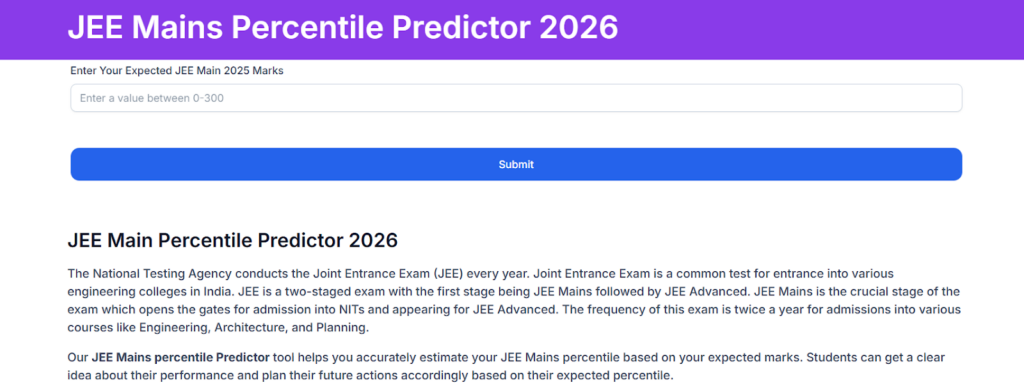
JEE Mains 2026 Percentile Predictor
Students who took JEE Main January 28 Shift 2 can now predict their expected percentile score with CollegeDost’s JEE Mains 2026 Percentile Predictor. The predictor enables students to grasp their exam status early, analyse competition levels, and plan their next study strategy with clarity. Predicts your percentile score ahead of the official NTA JEE Main Result 2026announcement.
Conclusion
A detailed shift- and subject-specific JEE Main Paper analysis helps you understand the difficulty level, question trends, and significant chapters, helping you to better organise your revision. With the help of JEE Mains 2026 paper analysis, you may determine which topics were more important, which sections took the most time, and where conceptual clarity was most important to boost the 2nd attempt preparation.
Frequently Asked Questions
1. What was the overall difficulty of the JEE Main Paper of Jan 28 Shift 2 exam?
The overall paper was deemed moderate. Physics was surprisingly straightforward, while Chemistry was the most difficult and time-consuming. Mathematics remained relatively difficult and highly calculative, forcing students to be extremely selective about the questions they attempted.
2. Which subjects should I prioritise from the JEE Main Syllabus for the April session?
According to the JEE Main Exam Analysis, you must prepare for the complete JEE Main Syllabus with equal concentration because the subject difficulty varies. Chemistry recently shifted away from basic memory-based questions and towards integrated multi-concept issues, whilst Physics featured more statement-based questions.
3. What is the expected 99 percentile score for this shift?
Due to the unexpected difficulty of the Chemistry part and the calculative nature of Mathematics, the cut-off for a 99th percentile is expected to be lower than normal, perhaps falling between 170 and 180 marks.
4. How many questions are there in JEE Mains Paper 1?
As per the JEE Main paper pattern, there are a total of 75 questions totaling 300 marks asked from physics, chemistry, and mathematics.
5. Why is a JEE Main Mock Test necessary for my April session preparation?
JEE Main Mock Test is essential for improving time management and the “pick and choose” strategy. Practising with mocks teaches you how to “skip and move on” from difficult questions to identify the 30-35 “doable” ones that will help you improve your score.
6. How was JEE Mains Physics Questions in Jan 28 Shift 2 Paper?
The overall question is easy, but the paper was lengthy. Key topics of this shift were Ray optics, electrostatics, semiconductors, SHM, current electricity, rotation, moment of inertia, fluid mechanics, Potentiometer, vernier calliper, and thermodynamics.
7. What are high weightage of chapters in Jee Mains Chemistry section?
High weightage chemistry chapters of theshift 2 are Biomolecules (hemiacetal linkage), Amines (Hinsberg Reagent differentiation), and highly calculative Chemical Kinetics